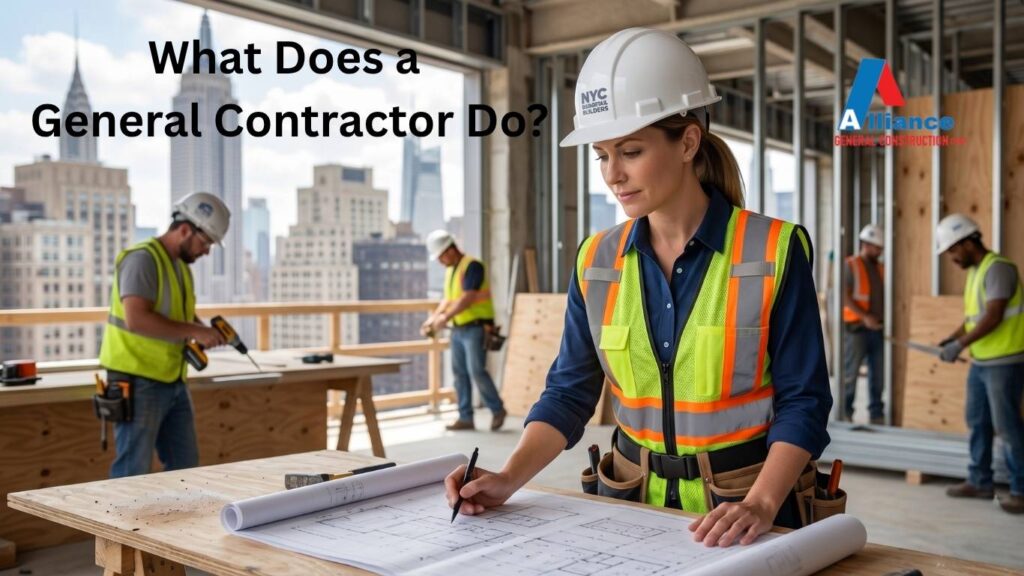
If you are planning a renovation, build-out, or structural project, a general contractor is the person who keeps the job organized from start to finish. They coordinate the people, permits, materials, timeline, and quality control so the project moves forward without chaos. For NYC homeowners, investors, and property managers, that role matters because one missed step can delay the whole job.
A general contractor is not just a builder. They are the project lead who manages the full construction process, communicates with subcontractors, and helps make sure the work meets code, budget, and schedule.
What is a General Contractor?
A general contractor is the main person or company responsible for overseeing a construction project. They plan the work, coordinate trades, manage schedules, handle communication, and make sure the project is completed properly. In simple terms, the general contractor is the hub that connects every part of the job.
For larger or more complex projects in NYC, a general contractor helps keep the work legal, organized, and efficient. That matters whether the project is a home renovation in the Bronx, a commercial build-out in Queens, or a multi-unit upgrade in Brooklyn.
Key takeaway: A general contractor turns a complicated construction job into one managed process.
What Does a General Contractor Do on a Construction Project?
A general contractor manages the whole job so the owner does not have to coordinate every detail alone. Their job usually starts before the first wall comes down and continues until the final punch list is complete.
Common general contractor responsibilities include:
- Reviewing the project scope
- Creating the work schedule
- Hiring and coordinating subcontractors
- Managing materials and deliveries
- Helping with permits and inspections
- Checking work quality at each stage
- Solving problems when plans change
- Keeping the owner updated on progress
On a real project, this means the GC is watching the full picture. If plumbing, electrical, framing, and finishing work all overlap, the contractor makes sure each trade arrives at the right time and the job does not stall.
For occupied homes and active businesses, this coordination becomes even more important. Less confusion usually means less disruption.
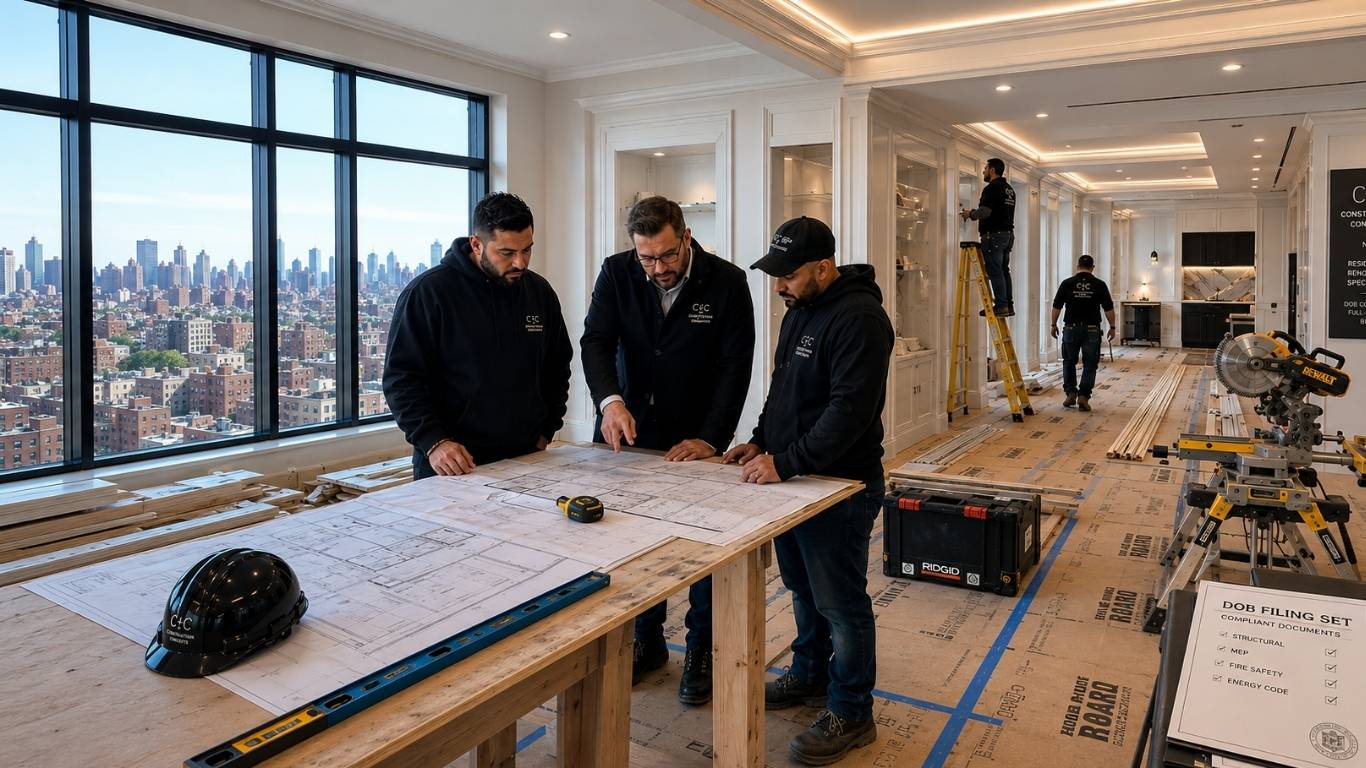
Key takeaway: The GC keeps the project moving while protecting time, quality, and coordination.
General Contractor Responsibilities Before and During the Job
A good General Contractor in NYC does much more than supervise workers. They help organize the project before construction even begins.
Before work starts
The contractor usually helps with:
- Understanding the scope of work
- Budget planning
- Scheduling the sequence of work
- Reviewing plans
- Coordinating permit needs
- Preparing the job site
- Identifying potential project risks
During construction
Once the job begins, the contractor manages:
- Daily coordination of subcontractors
- Material ordering and delivery timing
- Site safety and workflow
- Inspections and progress checks
- Change orders when plans shift
- Quality control from rough work to finish work
This is where a licensed general contractor adds real value. A renovation may look simple on paper, but once demolition begins, hidden issues often appear. A strong GC knows how to respond without letting the whole project spiral.
Key takeaway: The contractor is both planner and problem-solver.
General Contractor vs Subcontractor: What Is the Difference?
A general contractor and a subcontractor are not the same thing.
A general contractor runs the project.
A subcontractor performs a specific trade on that project.
For example:
- A plumber handles plumbing work
- An electrician handles electrical work
- A framer handles framing
- A painter handles painting
- The general contractor coordinates all of them
If you hire subcontractors separately, you become the project manager. That can work for smaller or highly specific jobs, but it often becomes stressful on larger projects.
Here is the difference in simple terms:
| Role | Main Job | Best For | Main Risk |
| General Contractor | Manages the full project | Renovations, builds, and multi-trade work | Choosing the wrong contractor |
| Subcontractor | Handles one trade | Specific trade-only tasks | Limited project oversight |
| Owner managing both | Coordinates everything personally | Experienced owners with time | Delays, errors, and missed details |
Key takeaway: The GC manages the whole system; subcontractors do the specialized work.
Why Hiring a Licensed General Contractor in NYC Matters
NYC construction is not the place for guesswork. Between building codes, permit requirements, inspections, and tight jobsite conditions, projects need strong coordination.
A licensed general contractor helps with:
- Code compliance
- Permit awareness
- Safer job execution
- Better trade coordination
- Cleaner scheduling
- Fewer costly mistakes
- More accountability
In the Bronx, Queens, Brooklyn, Manhattan, and Long Island, many projects involve older buildings, occupied spaces, or strict local requirements. That means the contractor needs to understand more than just construction. They need to understand sequence, compliance, and communication.
For owners, the biggest benefit is peace of mind. One experienced contractor can reduce back-and-forth, prevent rework, and keep the project focused on completion.
Key takeaway: In NYC, a good GC is part builder, part coordinator, and part risk manager.
What Kinds of Projects Need a General Contractor?
Not every job needs a full general contractor, but many do. The more trades involved, the more useful a GC becomes.
Projects that often need a general contractor include:
- Home renovations
- Kitchen and bathroom remodels
- Basement finishing
- Apartment renovations
- Tenant improvements
- Commercial build-outs
- Structural modifications
- Multi-room remodeling
- Property upgrades for investors
- Occupied-space renovations
Managing these stages internally requires a vast network of vetted professionals. If you are developing retail or office space, comprehensive commercial construction services handle these logistical complexities so you can focus strictly on your business.
How Alliance General Construction Corp Manages a Project
At Alliance General Construction Corp, the focus is full project management from start to finish. That means the job is not treated like a loose group of tasks. It is treated like one coordinated process.
Our Team-Built approach helps keep each phase aligned:
- We review the scope and project goals.
- We help organize the work sequence.
- We coordinate the right trades at the right time.
- We keep code compliance and structural integrity in view.
- We manage the project through to final finish.
For property owners, this matters because construction problems often come from poor coordination, not just poor workmanship. A strong general contractor helps avoid that.
When the job is in an occupied home or commercial space, communication becomes even more important. Clear planning can reduce disruption for owners, tenants, staff, and customers.
Key takeaway: A well-managed project usually looks simple to the owner because the contractor handled the hard parts behind the scenes.
Do You Need a General Contractor for Your NYC Renovation or Build?
Yes, you need a general contractor if your project involves structural alterations, multiple specialized trades, or requires NYC DOB permits. New York City operates under some of the strictest building codes in the country. Attempting to self-manage a major overhaul introduces massive risk and often leads to costly violations.
You definitively need a general contractor if your project requires:
- Filing Alt-1, Alt-2, or New Building (NB) permits with the DOB.
- Modifying load-bearing walls, foundations, or roof structures.
- Coordinating plumbing, electrical, and HVAC work simultaneously.
- Navigating strict co-op or condo board alteration agreements.
- Working within designated NYC Landmark Preservation Commission districts.
For a complete gut rehab or a multi-room update, partnering with an experienced General Contractor in the Bronx ensures your project stays fully compliant. Minor cosmetic updates—like painting a room or replacing a basic vanity—are the only scenarios where hiring individual tradesmen might suffice.
What Experienced NYC Contractors Know That Most People Miss
One thing many property owners underestimate is how much timing affects a project. In NYC, one delayed trade can affect inspections, deliveries, finishes, and move-in dates.
Experienced contractors know that:
- Poor sequencing creates extra cost
- Hidden building issues are common in older properties
- Trades must be coordinated in the right order
- Permit and inspection timing matters
- Clear communication prevents jobsite confusion
A good general contractor is not just reacting to problems. They are trying to prevent them before they start. That is where experience makes a real difference.
Key takeaway: The best GC is often the one who prevents delays you never had to see.
Frequently Asked Questions About General Contractors
What does a general contractor do exactly?
A general contractor oversees the full construction project, including scheduling, subcontractor coordination, permits, quality control, and communication with the owner.
Do I need a general contractor for a home renovation?
If your renovation involves multiple trades, structural work, or permits, a general contractor can help keep the project organized and compliant.
What is the difference between a general contractor and a subcontractor?
A general contractor manages the project. A subcontractor performs one specific trade, such as plumbing, electrical, or painting.
Does a general contractor get permits?
Often, yes. Depending on the project, the contractor may help coordinate permits and make sure the work follows local code requirements.
Why should I hire a licensed general contractor in NYC?
NYC projects often involve code rules, inspections, and complex coordination. A licensed contractor helps reduce risk and keep the job moving properly.
What types of projects are best for a general contractor?
Renovations, commercial build-outs, tenant improvements, structural work, and any project with multiple trades are strong fits for a general contractor.
Conclusion
Hiring NYC general contractor provides the centralized leadership, financial protection, and strict quality control that self-managing simply cannot match. In New York City, where rigid regulatory hurdles and logistical challenges can derail even the best-planned projects, having an experienced professional at the helm is indispensable. For over 10 years, Alliance General Construction Corp has delivered seamless, code-compliant results through our owner-operated, Team-Built approach. We navigate the complexities of NYC construction so you can enjoy a finished space built to the highest possible standards.
Ready to talk through your project? We offer free consultations for property owners across the Bronx, Queens, Brooklyn, Manhattan, and Long Island. Call us at (347) 515-8989 or submit a request online—a licensed project manager will respond within one business day.